
Tribalism no longer needs to pretend it doesn’t exist
The Macuas take what belongs to them and go, leaving the diocese behind.
There was a time in Mozambique when there was talk of the imperative of killing the tribe to give birth to the nation. That dream sadly belongs to the past, having been replaced by new values in which it is necessary to kill the nation to make a particular tribe, ethnic group or race flourish.
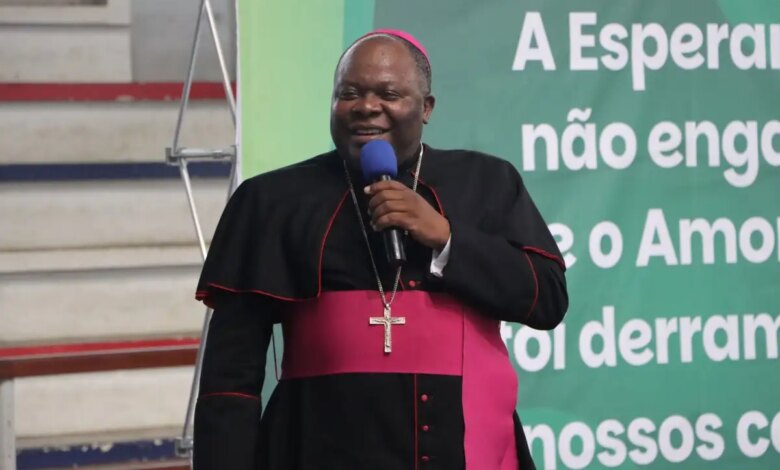
Someone had to remind us of this on Friday, during the funeral ceremony dedicated to Bishop Dom Osório Citora Afonso, murdered in the early hours of the 6 June, in the episcopal residence in the City of Quelimane.
In the family’s message, read during the event in the presence of the President of the Republic, Daniel Chapo, the family’s conviction that Dom Osório was murdered because of ethnic-regional related disputes within the local Catholic Church was quite evident. It is inferred that at the other end, elements of the rival and predominant Chuabo ethnic-linguistic group could have been involved.
“We want to apologize to the good believers, because we today are taking with us what is ours,” said the family’s representative, Judite Mussácula, former Secretary of State of Zambezia Province, before ending her speech with the words: “we the Macuas are going. Keep the diocese.”
There was a popular effort to suggest that she had said “your diocese”. Even so, the meaning is the same, and it must be in these last words where the rubble of a project for national unity lies, having died not because Mozambique is a mosaic of several tribes, different linguistic groups, ethnicities or races, but because in the middle of the path between the dream and the reality, the notion of belonging to the same Homeland united by a common destiny has disappeared.
In fact, there is nothing wrong with someone evoking their ethnic, regional or racial origins and feeling proud to be what they are. Before the nation, there are the various groups that compose it. What becomes problematic is when these elements are used to reinforce stereotypes, discriminate or create the false idea of one group’s superiority or inferiority in relation to others, or when the place of citizens in society is defined in terms of their origin or surname.
The death of Dom Osório seems to have been framed in this use of the ethnic factor as an element of disqualification, often based on old prejudices that certain sectors unscrupulously try to revive as an expedient for access to privileges. It is the manipulation of ethnicity in action by interest groups that in fact may not even have any roots within the very ethnic groups they purport to belong, but something that provides them with access to power and the benefits thereof.
Sadly, Mozambique today lives within this reality, where the ethnic-regional appeal works as a badge that attributes to the subject the natural right of access to some public office, as a springboard for obtaining undue wealth.
The cycles of rotation in governance and in other sectors of public life, for example, which should be seen as salutary mechanisms for sharing and distributing power among the various parts that make up society, are appropriated by interest groups that use them opportunistically for their own ends, thus distorting them from their original conception and essence. Associations of “natives and friends” of regions are multiplying, which begin innocently, but then crystallize into true organizations of ostracization and hatred against the other(s).
The notion that “now it’s our turn”, whenever a new cycle of governance opens, has little to do with the predisposition to public service for the benefit of others, than an opportunity that opens up for the offspring to serve themselves and draw from the public patrimonial sphere as much as possible while time lasts, before the cycle closes and another one opens to continue the tradition.
It is a national tragedy that must make Eduardo Mondlane and Samora Machel want to escape from their drawers, a system in which merit is subordinate to descent, lineage or surname. At that funeral ceremony, in the presence of the highest authority of the State, tribalism, ethnicism and regionalism were displayed in such a natural and exuberant way because, frankly, since the project of nation-building was abandoned, any pretense of devotion to the values of cohesion and national unity is no longer necessary.