

The difference between change and transformation
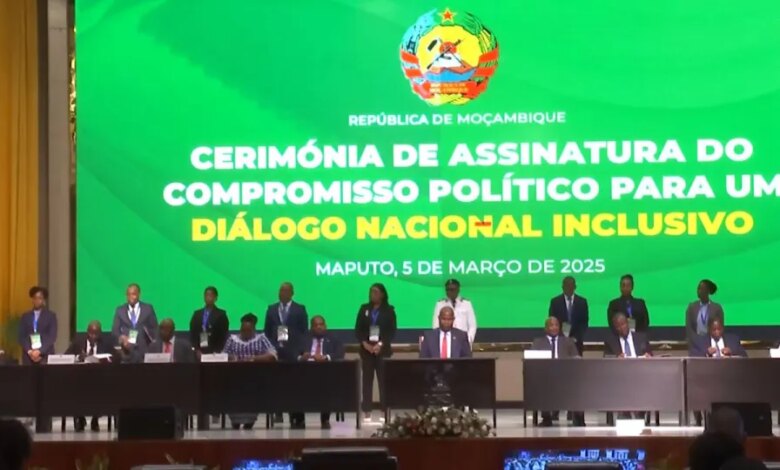
After the justice congress in June, the Attorney General’s Office has just sent its main recommendations to the Technical Commission for the Implementation of the National Dialogue (COTE), which will include them in its general proposal, culminating in a possible constitutional amendment.
Named “Pact for Justice and the Rule of Law”, the document projects a 20-year vision for the justice sector, containing, among several provisions, proposals for the transformation of the Constitutional Council (CC) into a Constitutional Court, the Administrative Court (TA) into the Supreme Administrative Court, in addition to the establishment of a Public Accounts Court. The stated objective is to strengthen the independence, transparency and effectiveness of the judiciary through a set of measures that should also ensure financial autonomy. An integral electoral system is also seen as a key element in consolidating peace and stability.
There is a clear understanding in these proposals that Mozambique’s development depends on its ability to have strong, independent democratic institutions guided by the principle of sole and exclusive obedience to the law.
Something that can be considered a merit of the Mozambican body politic has always been its ability to anticipate changes and seek to adapt its governance model to new challenges.
Even before the multi-party system, political changes were registered accompanied by a legislative process that also created more modern institutions, which were supposed to be more adequate to new political realities that the country faced at any given moment. And ever since the idea has become cemented that if there is a problem, the solution is to establish a new institution or transform one that already exists, with the belief that if there is a new problem, the old institution can no longer be part of its solution.
One of the arguments in the current debate on the justice sector is that a future Constitutional Court seems capable of exercising more effectively the functions hitherto assigned to the Constitutional Council, such as facilitating “citizens’ access to the appeal of unconstitutionality”.
It is also understood that unlike the Constitutional Council, where five of the seven judges are appointed according to their political-party loyalty, in the hypothetical Constitutional Court there will be greater intervention by the magistrates’ own control and disciplinary bodies. Underlying this proposal is also a widely held view that due to the composition of its body of judges, the Constitutional Council is less a court than an entity whose decisions are influenced by the political leanings of its members.
It is important, however, to mention that the Constitutional Council was born in almost similar circumstances in relation to electoral justice, when the belief prevailed then, that the body would be more effective in adjudicating electoral disputes, precisely given the principle of political party proportionality embodied in the appointment of its associate judges.
That is why fears may be justified that what is being proposed now may be just another name change, with the current associate judges of the Constitutional Council moving to the Constitutional Court, but without any transformation in terms of giving this body the real independence it needs to be more effective in the exercise of its functions.
Indeed, the obstacle to Mozambique’s progress is not the absence of institutions, an adequate legal framework or even capable professionals. It resides, above all, in a political culture based on cosmetic changes, but which do not necessarily propose to profoundly transform society. In other words, changes are valid and useful only if they contribute to maintaining and reinforcing the status quo.
In fact, the political problems facing Mozambique are not the product of an inadequate institutional framework, but rather of a political culture that is impervious to transformation.
Even the current political dialogue did not become necessary because there was no adequate constitutional, legal or institutional framework. The constitutional postulates are clear, the laws and institutions exist, but none of these works on their own.
In its section on electoral justice and integrity of the electoral process, the Pact for Justice proposes, for example, the establishment of “jurisdictions specialized in electoral matters, which are independent and professionalized, clearly defining their competences”. It is a brilliant idea, but this is not the fundamental reason why the electoral processes in Mozambique are not credible.
The changes may be welcome, but they will remain cosmetic until they get to the bottom of the matter, which is the absence of a real political will for the institutions to function solely and exclusively in obedience to the law. And therein lies the difference between change and transformation.